
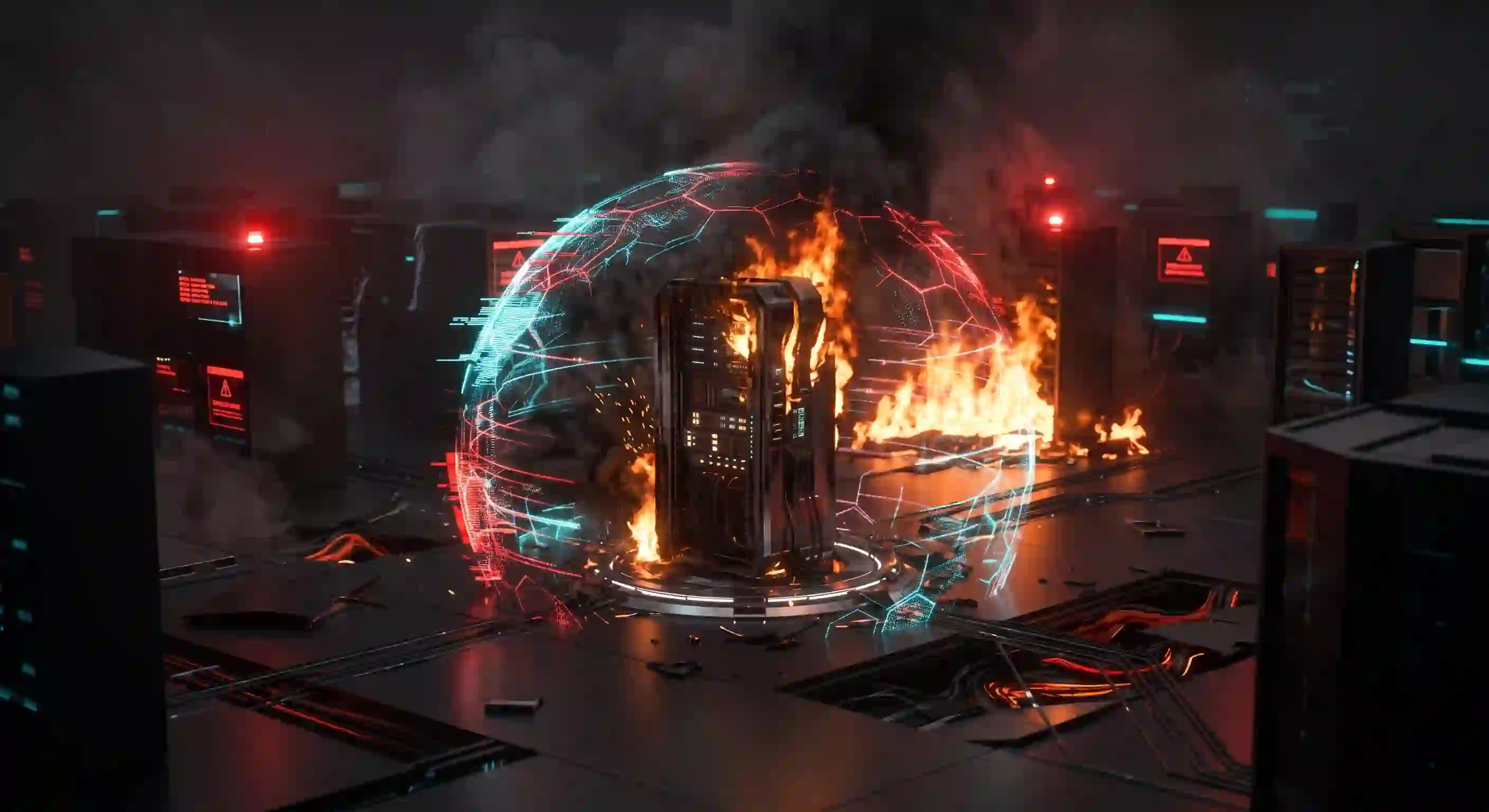
The Vulnerabilities of Traditional Backup in Disaster Recovery and Modern Approaches with RaTurka
📌 Executive Summary
Ensuring business continuity in modern digital infrastructures has evolved far beyond the simple concept of copying data to a secondary disk[cite: 5, 11]. Traditional backup methods leave organizations vulnerable to modern cyber threats and sophisticated ransomware attacks[cite: 3, 4, 5]. Today, malicious actors silently map and target your disaster recovery lifelines—your backup repositories—long before encrypting production systems[cite: 3, 4, 10]. Merely taking periodic backups does not constitute a complete disaster recovery plan; true resilience requires restoring critical systems with zero data loss (RPO) and minimal operational downtime (RTO)[cite: 4, 5, 11].
This article examines the structural vulnerabilities of traditional backup architectures and explores modern disaster recovery strategies, such as the 3-2-1-1-0 immutable backup framework[cite: 3, 5, 10]. Furthermore, we detail how RaTurka transforms server security and data resilience using its lightweight 30 MB NativeAOT agent, eBPF kernel-level defense, and Zero-Trust SSH access controls[cite: 2, 5, 8, 9].
The Structural Vulnerabilities of Traditional Backup Systems
Organizations frequently conflate routine data backups with a comprehensive Disaster Recovery (DR) plan[cite: 5, 11]. While backup focuses on archiving historical data, disaster recovery manages the orchestrated restoration of all information systems, network infrastructure, applications, and user access during a crisis[cite: 5, 11]. Traditional periodic backups fail to meet modern business continuity requirements for several key reasons:
-
Broad RTO and RPO Windows: Standard daily backup schedules (typically executed overnight) leave a theoretical Recovery Point Objective (RPO) window of up to 24 hours[cite: 5, 10]. In a critical failure, losing 14 to 15 hours of real-time transactions inflicts severe financial damage[cite: 5]. The total business cost of a disaster can be expressed using the following mathematical relationship[cite: 5]:
According to NIST SP 800-34 standards, an optimal recovery strategy minimizes total disaster impact by balancing infrastructure investment against the escalating cost of operational downtime[cite: 5].
Ctotal = (RTO × Cdowntime) + (RPO × Cdata_loss) - Targeting of Backup Repositories by Ransomware: Modern cybercriminals linger in corporate networks for months to identify critical assets and backup repositories[cite: 4, 10]. Once administrative credentials are compromised, network-attached traditional backups are corrupted, encrypted, or deleted first to force ransom payments[cite: 3, 4, 10].
- Insider Threats and Privileged Escalation: Traditional backup agents rely on full system administrative rights[cite: 3, 5]. If root or admin accounts are compromised, malicious actors can disable backup services or wipe retention policies directly[cite: 3, 5, 10].
Modern BCDR (Business Continuity & Disaster Recovery) Frameworks
To combat evolving ransomware techniques, data protection standards have advanced from the traditional 3-2-1 rule to the 3-2-1-1-0 strategy[cite: 3, 5, 10]:
- 3 Copies of Data: Maintain primary operational data alongside at least two backup copies[cite: 3, 10].
- 2 Different Media: Store backup copies on two distinct storage media types (e.g., local disk and cloud storage)[cite: 3, 10].
- 1 Off-site Location: Keep at least one backup copy in a geographically separate facility to guard against physical disasters[cite: 3, 10].
- 1 Immutable/Air-Gapped Copy: Ensure at least one copy is locked using Write-Once-Read-Many (WORM) policies or isolated networks, preventing modification or deletion even by root administrators[cite: 3, 5, 10].
- 0 Recovery Errors: Perform automated restoration tests in isolated sandbox environments to guarantee error-free recovery during actual disasters[cite: 3, 5, 10].
RaTurka: A New Paradigm in Server Security and Data Resilience
A robust disaster recovery plan requires tight integration between server management, perimeter security, and privilege control[cite: 5]. Legacy control panels (e.g., cPanel, Plesk) expose open management ports and consume massive system resources, creating broad attack surfaces and slowing down replication processes[cite: 5, 6, 8, 9]. RaTurka eliminates these architectural flaws through a security-first, hybrid SaaS model[cite: 2, 5, 8, 9].
| RaTurka Module | Role in Disaster Recovery & Data Resilience |
|---|---|
| RaGent (Minimalist Agent) | Built with .NET 10 NativeAOT, RaGent operates with a tiny 30 MB RAM footprint and zero runtime dependencies[cite: 1, 2, 5, 6, 9]. By freeing up server hardware, it provides maximum CPU and I/O capacity for Continuous Data Protection (CDP) and backup replication, reducing total cost of ownership (TCO) by up to 40%[cite: 5, 6]. |
| RaWarden (Zero-Trust SSH Gateway) | Protects backup configurations from compromised administrator credentials. Using OpenSSH ForceCommand integration, privileged console commands require approval via the panel under the Four-Eyes Principle[cite: 2, 5, 8, 9]. Malicious actors cannot wipe backups or terminate services via SSH[cite: 5, 9]. |
| RaDome & RaVision (Autonomous Threat Mitigation) | RaDome operates at the kernel level (eBPF/XDP) to drop malicious traffic instantly, while RaVision analyzes process trees and session anomalies[cite: 1, 2, 5, 8, 9]. If unauthorized data encryption or exfiltration is detected, RaDome autonomously isolates the server at the network layer to prevent lateral movement to backup repositories[cite: 5, 8, 9]. |
| Automated Backup Schedules | Enables scheduled cron tasks to automatically back up databases, web files, and system configurations, seamlessly offloading them to remote S3 object storage or cloud providers[cite: 1, 5]. |
By employing a Zero Inbound Port architecture, RaTurka keeps managed servers completely hidden from external port scanners and automated botnets, eliminating direct entry points for potential attackers[cite: 1, 5, 8, 9].
Conclusion
In the modern threat environment, relying solely on traditional backup methods is insufficient for ensuring business continuity[cite: 4, 5]. Organizations must adopt comprehensive BCDR frameworks, immutable storage, and the 3-2-1-1-0 backup rule[cite: 3, 5, 10]. Furthermore, securing server infrastructure with Zero-Trust principles, low-footprint agents (30 MB RAM), and autonomous threat mitigation like RaTurka provides the necessary resilience to withstand and recover from cyber disasters[cite: 2, 5, 6, 8, 9].
Kaynakça
- RaTurka Sıkça Sorulan Sorular, RaTurka Kurumsal, 2026[cite: 1].
- RaTurka — Yeni Nesil Sunucu Yönetimi, RaTurka Kurumsal, 2026[cite: 2].
- Fidye Yazılımına Karşı Değişmez Yedekleme Rehberi, Ventures DC, 2026[cite: 3].
- Şifreleme Olmadan Şantaj: 2026'da Yedekleme Stratejiniz Neden Artık Tek Başına Yeterli Değil, Sprint Teknoloji Blog, 2026[cite: 4].
- Felaket Kurtarma Stratejilerinde Geleneksel Yedeklemenin Zayıf Yönleri ve Modern Yaklaşımlar, Kapsamlı Araştırma Raporu, 2026[cite: 5].
- cPanel ve Plesk Zamlarından Kaçış: Sunucu Maliyetlerini Düşürmenin Yolları, RaTurka Blog, 2026[cite: 6].
- Researcher: RaTurka & Disaster Recovery Blog Post Sources, RaTurka Bilgi Bankası, 2026[cite: 7].
- Modern Sunucu Yönetiminde Gözden Kaçan Tehlike: Geleneksel Kontrol Panellerinin Mimarî Riskleri, RaTurka Blog, 2026[cite: 8].
- RaTurka Güvenlik Odaklı Sunucu ve Hosting Yönetim Ekosistemi Sunumu, RaTurka, 2026[cite: 9].
- Immutable Backup Nedir? Fidye Yazılımlarına Karşı Neden Klasik Yedekleme Artık Yetmiyor?, Ixpanse Teknoloji, 2026[cite: 10].
- Yedekleme ile Felaket Kurtarma Arasındaki Fark Nedir?, İstanbulut Blog, 2026[cite: 11].
- Bulut Yedekleme - Otomatik Veri Yedekleme Çözümü, Epasis / Narbulut, 2026[cite: 12].
Related Posts
 Agent-Based Architecture
Avoiding cPanel and Plesk Price Hikes: Ways to Reduce Server Costs
Put an end to rising cPanel and Plesk licensing fees! Reduce your server costs with RaTurka’s RaGent architecture, which uses just 30 MB of RAM, and its built-in security shields.

 Agent-Based Architecture
Managing Servers Without Opening Ports: What Is Zero Inbound Port Architecture?
Discover how to manage servers securely without open inbound ports using Zero Inbound Port Architecture and RaTurka's lightweight 30 MB RAM agent platform.
 Agent-Based Architecture
Server Management Guide for Software Agencies: Eliminate Resource Waste and Hardware Tax
Discover how software agencies can eliminate cloud waste, avoid cPanel/Plesk price hikes, and reduce TCO by 40% using RaTurka's 30 MB RAM agent architecture.