Next-Generation Infrastructure Management: SaaS Control Panels vs. Traditional Hosting Panels

Next-Generation Infrastructure Management: SaaS Control Panels vs. Traditional Hosting Panels
As internet infrastructure rapidly evolves from monolithic setups to microservices, containerization, and distributed environments, the control panels managing these systems have long lagged behind. Many organizations still attempt to manage modern cloud infrastructure using monolithic hosting panels designed decades ago. Today, infrastructure teams face a critical crossroads: Traditional panels installed directly on the host, or a centralized SaaS/Hybrid management plane?
In this article, we technically compare both architectural approaches against modern standards of cybersecurity, operational efficiency, and scalability.
1. Attack Surface and Network Security
The sharpest contrast between the two architectures lies in their external entry points (ports) open to the public internet:
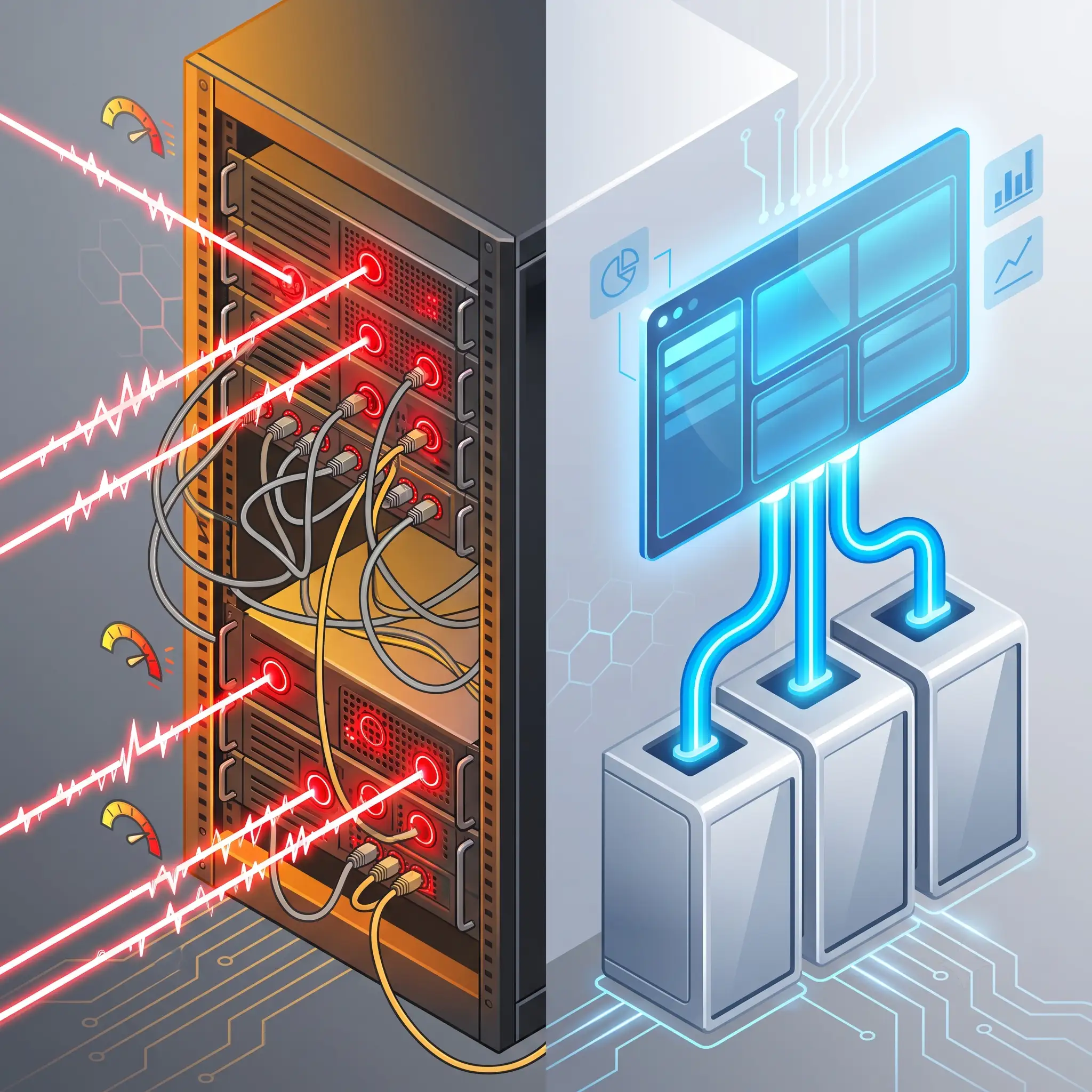
- Traditional Panels: Host the user interface (UI) directly on the server itself. This necessitates keeping management ports (e.g., 2087, 8443) wide open to the public. Becoming an immediate target for attackers, these ports serve as an open invitation for brute-force and zero-day exploitation attempts.
- SaaS / Hybrid Management: Completely isolates the UI layer from the server, offloading it to a centralized cloud panel. On the server side, only a lightweight agent runs[cite: 1]. This agent opens absolutely zero inbound management ports; instead, it establishes secure, outbound encrypted connections from the inside out to the central panel[cite: 1]. Your server remains entirely invisible to external port scans.
"The most secure port is a closed port. SaaS architectures physically separate the management interface from the target server, theoretically reducing the external network attack surface to zero."
2. Resource Isolation and Server Stability
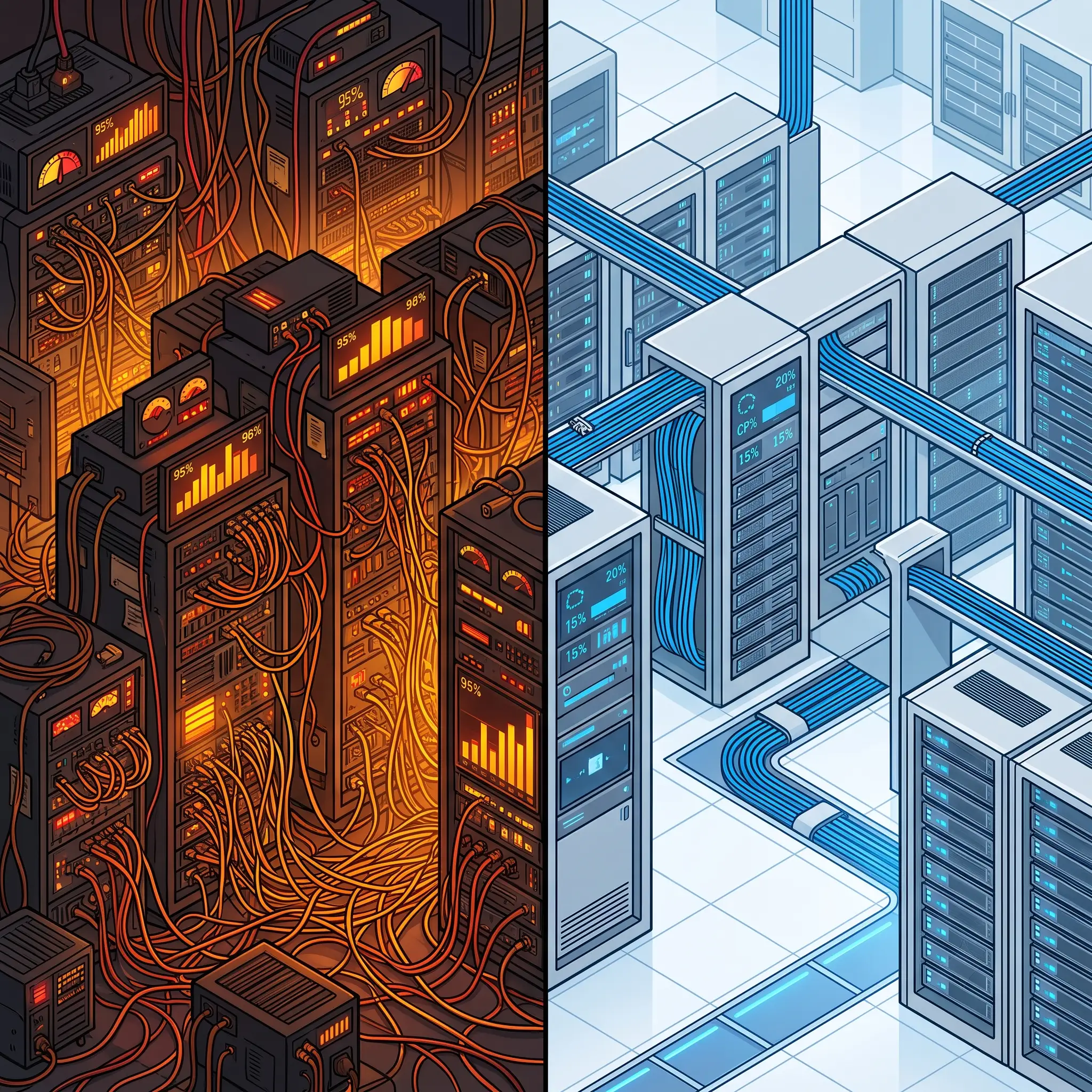
Traditional panels run monolithically side-by-side with web servers (Nginx/Apache), databases (MySQL), and mail services on the same OS layer. A heavy task initiated on the panel—such as generating statistics or compressing large backups—can immediately spike utilization and crash your primary web application or API due to Out-of-Memory (OOM) errors.
In a SaaS-based management model, intensive data processing, log analytics, chart generation, and heavy computations are handled entirely by the infrastructure of the central SaaS platform. The agent on your host remains a lightweight execution bridge that merely enforces commands and streams metrics[cite: 1]. Consequently, your server resources are never hijacked by panel processes, guaranteeing maximum uptime for your business-critical workflows.
3. Multi-Server (Fleet) and Tenant Isolation
As the number of managed servers scales, tracking them via monolithic panels becomes an operational nightmare. Managing distinct credentials, keeping dozens of tabs open, and manually running updates per host is unsustainable. Furthermore, these legacy panels lack rigid multi-tenant isolation models to prevent different teams or clients from cross-accessing underlying system layers[cite: 1].
Centralized SaaS panels allow administrators to oversee hundreds of remote nodes from a single dashboard with one-click orchestration[cite: 1]. Advanced agent planes natively understand ownership boundaries—knowing exactly which resource belongs to which tenant or team[cite: 1]. This allows cross-tenant access control (RBAC) and strict isolation policies to be securely coordinated from a single source of truth[cite: 1].
Conclusion: The Future Standard of Infrastructure
Traditional hosting panels were sufficient for an older era of the internet, where simple websites sat on isolated servers. However, in today’s landscape of cloud-native deployments, Docker containers, and stringent cybersecurity regulations, monolithic structures introduce unacceptable cost inefficiencies and security liabilities[cite: 1].
The hybrid model provided by RaTurka marries all the orchestration capabilities of traditional tooling with the convenience of a centralized SaaS panel and the elite security standards of the **RaGent** execution plane[cite: 1]. To future-proof your infrastructure, eliminate idle resource overhead, and deploy an invisible layer of defense, experience our next-generation agent architecture today[cite: 1].